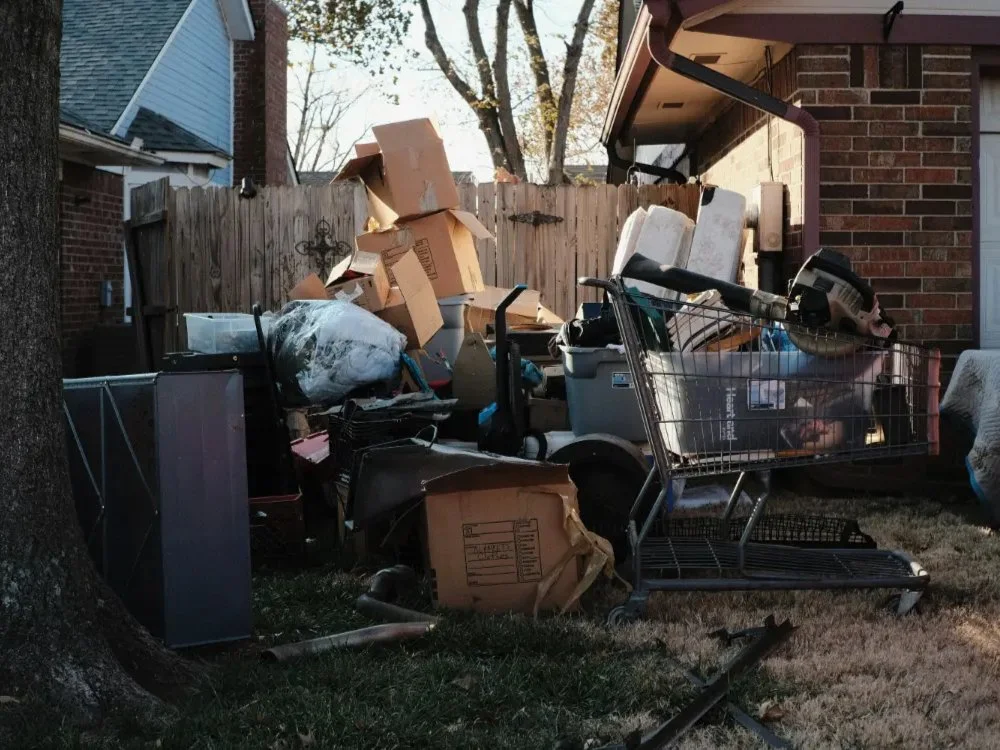
Most furniture removal starts with a deadline. The new sofa arrives Thursday, the lease ends on the 31st, or a parent's house has to be cleared before the listing goes up. The piece you're replacing still has to go somewhere, and where it can go depends mostly on what shape it's in and which county you live in.
This furniture removal guide starts with that decision. It then covers getting a piece ready to leave the house and the bulk pickup rules in Howard, Baltimore, and Carroll counties. If you already know you'd rather skip the lifting, send us a list of what's going and we'll quote the job for free.
Decide where each piece should go
Sorting comes before any lifting. A dresser headed to a charity needs different handling from one headed to the curb, and the choice also decides who you'll be calling and when.
Judge the condition honestly
Donation centers and buyers look for the same few problems. Stains, tears, strong odors, pet hair, broken frames, and missing hardware are the usual reasons a piece gets turned away, and any sign of bed bugs rules a piece out. Repair minor faults like a loose screw first, then confirm the charity will accept the piece. A sofa with a cracked frame that sags in the middle won't pass, however good the fabric looks.
Be strict at this stage. A piece that gets refused on your doorstep by a donation driver can cost you a week of waiting for the next option.
Sell what still has value
Solid wood dressers, complete dining sets, and well-known brands tend to sell on local marketplaces. Particleboard pieces and worn upholstery usually don't, even when priced low. If something hasn't sold within a week or two of a fair listing, move it to another pile.
Donate what someone else can use
Call before you assume a charity will take something. Acceptance rules change, and some groups won't take mattresses or upholstered items in any condition. Howard County publishes a list of local donation organizations, several of which offer pickup, and Baltimore County keeps a reuse directory of groups that accept furniture, beds, and rugs.
If a donation pickup lands near your regular trash day, label the donated pieces clearly and keep them close to the house. Howard County gives residents the same advice, since anything that ends up in the back of a trash truck is very hard to get back.
Send the rest to disposal
Anything broken, stained, or unwanted by anyone else goes to disposal through a county program, a drop-off facility, or a hauler. Ask any hauler where non-donatable furniture goes and whether any of its materials can be recycled. We look at what usually happens to it in what happens to your junk after it gets hauled away.
How to prepare furniture for removal
Most of the trouble on removal day comes from things nobody checked beforehand. A few minutes with a tape measure and an empty drawer can save a scuffed wall and a last-minute scramble.
Empty every drawer and cushion
Pull each drawer all the way out and look behind it, because papers and small items slip down the back. Lift the sofa cushions and run a hand along the frame. Check recliner pockets and the storage under ottomans and bed frames too. Spare keys, jewelry, and old photos often turn up in these spots, so check them before the furniture is loaded.
Measure the piece and the way out
A wardrobe or sectional that came in years ago may not leave by the same route, especially if a railing or door has changed since. Measure the piece at its widest and deepest points, then measure every doorway, hallway turn, and stairwell it has to pass. Taking a door off its hinges often gains an inch or so. If it still won't clear, the piece will need to come apart, or your hauler will need to know before they arrive.
Remove glass, mirrors, and loose parts
Glass shelves, glass tabletops, mirrors, and drawers should come off before the frame moves. They're heavy for their size, they shift when the piece tilts, and they crack easily. Wrap glass in a blanket or flattened cardboard and carry it upright. If the piece is going to a new home, put its screws in a bag and tape the bag to the frame.
Disassemble only what's built to come apart
Bed frames, bunk beds, modular shelving, and tables with removable legs are made to come apart, and they carry far more easily in pieces. Some sofas and recliners also have removable legs, backs, or modular sections. Check the manufacturer's instructions and remove only the parts designed to detach. Baltimore County's bulk pickup does require large items to be broken down first. If you're hiring a crew, ask before you take anything apart, since some pieces travel more safely whole.
Clear and protect the route
Move rugs, plants, and side tables out of the path. Pad door frames and banister corners wherever a big piece has to turn. Keep pets shut in a room on pickup day, and leave space near the door for a truck to park. In an apartment or condo, find out whether the building wants the elevator reserved or the work done during set hours.
Make a list with photos
Write down every piece that's leaving, which floor it's on, and anything awkward about getting it out, then add a photo of each. A list like that helps a hauler prepare a more accurate estimate. It also lets a relative or property manager oversee the pickup when you can't be there, without anything you meant to keep going out with the rest.
Ways to dispose of old furniture, compared
Every option trades money against time and effort. The table below shows what each one asks of you, using the county programs that apply locally.
| Option | What it costs | Who does the lifting | Main limits | Works best for |
|---|---|---|---|---|
| Selling | Nothing, and you may recover some money | You and the buyer | Slow, and only good pieces sell | Solid wood, sets, and known brands |
| Donation pickup | Often free; confirm any pickup fee | The charity's crew, sometimes curbside only | Strict condition rules and booking lead times | Clean, intact pieces |
| County bulk pickup | Free for eligible homes in Baltimore and Howard counties | You, as far as the curb | Item counts, size limits, and set dates | A few broken pieces with time to wait |
| County drop-off or landfill | Free at Baltimore County drop-off centers; by weight at Carroll County's Northern Landfill | You, at both ends | You need a truck and help unloading | Anyone with a pickup and a free morning |
| Dumpster rental | A rental fee, often with weight charges | You | Needs driveway space | Renovations and cleanouts spread over weeks |
| Removal crew | Varies by provider, load size, item type, and access | The crew | Booking and price | Heavy pieces, stairs, deadlines, and large loads |
A dumpster can look like the budget choice next to a crew, and for a long renovation it can be. For a one-day clearout, get a price for each and compare the totals, as we do in junk removal vs dumpster rental.
Mattresses, glass, and other hard-to-remove furniture
Some pieces don't fit the usual approach. They're heavier than they look, county programs exclude them, or careless handling spreads a problem through the house.
Sleeper sofas and power recliners
A sleeper sofa hides a folding steel bed frame, which makes it much heavier than a regular couch of the same size. Tie or tape the mechanism shut so it can't spring open on the stairs. Power recliners and lift chairs have motors and wiring inside. Unplug them, set aside any separate power supply, and mention them when you ask for a quote. Howard County's bulk collection excludes sleeper sofas and chairs with electric plugs, so line up another disposal option before moving either one outside.
Mattresses and box springs
Baltimore County's bulk program takes mattresses, but plenty of charities won't accept a used one at all. Each mattress and box spring also counts as its own item on a county pickup. In Baltimore County, where the limit is three, a mattress, box spring, and bed frame fill an entire collection day.
Glass, mirrors, and stone tops
Neither Baltimore County nor Howard County takes mirrors or plate glass in bulk collection. Broken mirrors and glass tabletops can also cause serious cuts. Wrap them, move them upright with two people, and keep them away from any pile where something could land on them.
Pianos, pool tables, and the heaviest pieces
Baltimore County excludes pianos and pool tables from bulk collection. Howard County also excludes pianos and will leave behind other items that two workers cannot lift. Jobs like these usually need extra hands, the right equipment, and a plan for any stairs. Ask a hauler directly whether they'll take the item before you book.
Furniture with pests or mold
A piece with bed bugs, roaches, or mold can't be donated, and moving it carelessly can spread the problem to other rooms. Tell the hauler about pests or mold before booking, and confirm whether they accept the item and how it should be prepared. Sealing it in heavy plastic with the seams taped keeps pests from dropping off on the way out. Once it's outside, label it clearly so nobody picks it up from the curb and carries it into another home.
Bulk pickup rules in Howard, Baltimore, and Carroll counties
Curbside bulk pickup is the cheapest way to get rid of broken furniture, but each county runs it differently. Check your county's page before you set anything out, because items that break the rules tend to stay where you left them.
Baltimore County
Single-family homes and townhomes get two scheduled bulk collections a year, with up to three items each time. The county assigns the dates, so there's nothing to book; you look up the schedule for your address. Items go out after 6 p.m. the night before, wherever your trash normally sits.
Large items must be disassembled, and nothing longer than eight feet is accepted. Residents can also take bulk items to any of the county's three drop-off facilities at no charge, though staff there won't help unload. Baltimore City is a separate jurisdiction with its own bulk trash program, booked through 311.
Howard County
Howard County's bulk trash collection is meant for broken items and has to be scheduled. Each pickup takes up to four items, each less than six feet wide, and anything two workers can't lift is tagged and left behind. Set items within five feet of the county road by the evening before your scheduled collection.
Everything collected as bulk trash goes to a landfill, which is why the county steers residents toward donation first. Any Howard County resident can also drop bulk items at the Alpha Ridge Landfill.
Carroll County
In unincorporated Carroll County, residents generally arrange collection with a licensed private hauler or haul their own waste. If you live in one of the county's incorporated towns or in an HOA, check its collection arrangements and bulk-item rules first. To take furniture yourself, the Northern Landfill in Westminster accepts it under a bulky waste category priced at $75 per ton since January 1, 2026, with an $8 minimum fee. The landfill serves Carroll County residents.
When the county schedule doesn't match your deadline, or the county won't take the piece, a private crew fills the gap. Many Carroll County households already book their own haulers, and our junk removal in Carroll County covers Westminster, Eldersburg, Sykesville, and the towns around them. We work across Howard and Baltimore counties as well.
When to hire a furniture removal service
Doing it yourself works when the piece is light, the county's next date suits you, and you have a vehicle and a second pair of hands. Once one of those is missing, a crew starts to earn its fee.
That usually happens in a handful of situations:
The piece is upstairs or in a basement, with turns that need three people
A delivery or move-out date is fixed and the county schedule doesn't line up
You have more pieces than a single bulk pickup allows
The county won't take the item, or you have no truck for a drop-off run
Two bigger jobs also go more smoothly as a single booking. Emptying a parent's home before a sale is what an estate cleanout covers, and landlords clearing a unit between tenants can get it done in one visit with a property cleanout.
Read More: Junk Removal Cost: What You're Really Paying For
Our family-run team handles furniture removal for a single sofa or a houseful, including the lifting, loading, and hauling. Tell us what's going, where it sits, and what the route out looks like, and we'll send a free quote with no obligation to book. If you're working to a deadline, ask about same-day availability.
